Overview
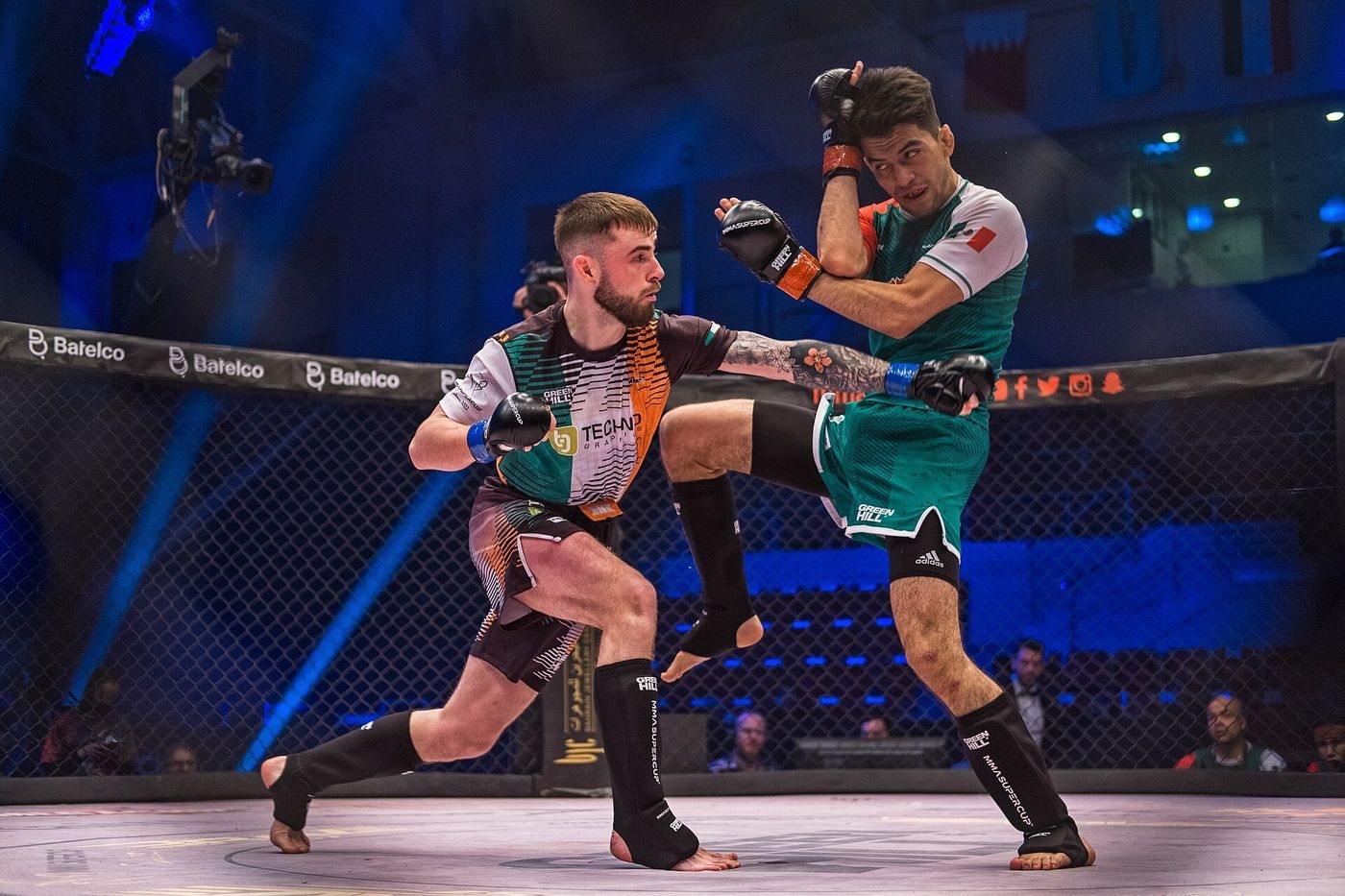
In MMA two fighters can strike standing up, take each other down and carry on fighting on the mat. Punches, kicks, knees and elbows, throws, pins, joint locks and chokes are all allowed, within a defined list of fouls and under a referee who can stop the bout at any moment.
Professionals usually compete in an eight-sided fenced cage, made famous by the UFC, and sometimes in a ring. A fight is won by knockout, referee stoppage, submission or the judges' decision.
A complete fighter covers three areas: striking (boxing, Muay Thai, kickboxing), wrestling to take the fight down or keep it standing, and groundwork, mostly drawn from Brazilian jiu-jitsu. Many people start in one of these and add the other two later.
Club sessions mix technique, wrestling drills, light sparring and conditioning. Most people who train never compete.
History
Combining strikes and grappling is ancient. Greek pankration joined the Olympic Games in 648 BC, with only biting and eye gouging banned.
The modern sport owes most to Brazil. From the 1920s, vale tudo (anything goes, in Portuguese) bouts pitted fighters from different styles against each other. The Gracie family, who taught in Rio de Janeiro a jiu-jitsu passed on by the Japanese judoka Mitsuyo Maeda, used them to prove their method worked. In Japan, Shooto, Pancrase (1993) and Pride (1997 to 2007) also ran professional mixed bouts.
The UFC held its first tournament in Denver on 12 November 1993: eight fighters, no weight classes, no rounds and no judges. Royce Gracie, lighter than his opponents, won by submission and put Brazilian jiu-jitsu on the map. Under pressure from critics, the promotion added time limits in 1995, then weight classes and gloves. On 3 April 2001 the New Jersey athletic commission brought regulators and promoters together to agree a common rulebook, which the Association of Boxing Commissions adopted unanimously on 30 July 2009 as the Unified Rules of Mixed Martial Arts. The UFC staged its first women's bout in 2013.
France was one of the last European countries to allow MMA competition. Fighters trained in pankration-style formats without ground strikes or went abroad to compete. In January 2020 the government recognised the sport and handed it to the French Boxing Federation (FFBoxe), which set up an internal MMA body, the FMMAF. The first legal events followed in October 2020: MMA Grand Prix in Vitry-sur-Seine on the 8th and Bellator 248 at the Accor Arena in Paris on the 10th. The UFC held its first French card at the same venue on 3 September 2022.
On 7 August 2021 Ciryl Gane became the first Frenchman to win a UFC title, the interim heavyweight belt, by stopping Derrick Lewis in Houston. Benoît Saint-Denis at lightweight, Nassourdine Imavov at middleweight and Manon Fiorot at women's flyweight have all since appeared in the UFC rankings.
Techniques
On the feet, MMA borrows from boxing and Muay Thai: jab, cross, hook, uppercut, roundhouse kicks to the legs, body and head, knees and elbows. Small gloves offer less cover than boxing gloves, and the threat of a takedown changes the stance: lower, wider, hands ready to fend off a grab.
Wrestling links the two phases. The double-leg and single-leg, grabbing both legs or one, take the opponent down; the defender answers with a sprawl, throwing the legs back. Against the fence, the clinch is used to strike, set up a throw or pin the opponent in place.
On the ground, the order of positions comes from Brazilian jiu-jitsu: full mount, side control, back control, or guard when you are underneath and hold the opponent between your legs. Ground and pound, striking from a dominant position, is unique to MMA and accounts for many referee stoppages.
The most common submissions are the rear-naked choke, guillotine, triangle and armbar. Leg locks, including the heel hook, are legal for professionals; IMMAF bans the heel hook in amateur bouts.
Rules and competition
Professional MMA runs on the Unified Rules. A bout is three five-minute rounds, five for a title, with one minute's rest. Three judges score each round out of 10: 10-9 to the winner of the round, 10-8 or lower for clear dominance. Effective striking and grappling come first, ahead of aggression and control of the fighting area.
Fouls include head butts, strikes to the back of the head, spine and groin, eye gouging, biting, small joint manipulation, kicks or knees to the head of a grounded opponent and holding the fence. A fighter is grounded as soon as any part of the body other than the hands and feet touches the canvas.
The UFC has eight men's divisions, from flyweight (125 lb, 56.7 kg) to heavyweight (265 lb, 120.2 kg), and three women's divisions: strawweight (115 lb, 52.2 kg), flyweight and bantamweight (135 lb, 61.2 kg). Weigh-ins take place the day before, with a one-pound allowance for non-title fights.
Amateur MMA follows the rules of IMMAF, the international federation founded in 2012: three three-minute rounds, with elbows and forearm strikes, knees to the head, heel hooks and submissions that crank the neck or spine all banned. For 12 to 17-year-olds there are no strikes to the head at all and bouts are shorter.
In France, FFBoxe sets the technical and safety rules that every event promoter must follow. The UFC ran four Paris cards between 2022 and 2025, and French promotions such as ARES Fighting Championship and Hexagone MMA stage their own events.
Equipment
Professionals fight in shorts, open-fingered gloves of around 4 ounces that leave the fingers free to grip, a gum shield and, for men, a groin guard. Women wear a sports bra. Everyone fights barefoot.
In amateur competition IMMAF requires 6 to 8 ounce gloves supplied by the organiser, soft sock-style shin guards without Velcro, a short-sleeved rash guard, shorts and a gum shield.
To get started you need MMA training gloves, 14 to 16 ounce boxing gloves for stand-up sparring, shin guards, a gum shield, a groin guard, shorts with no pockets or metal fastenings and a rash guard. Some clubs also ask for a gi for Brazilian jiu-jitsu classes.
There is no belt system shared across countries. In France the FMMAF had introduced coloured grades (yellow, orange and green for the first levels). They have been suspended since 29 September 2026, along with amateur competitions, while a new body, France MMA, takes over these activities. A fighter's standing is in any case judged mainly on their record.
Photos
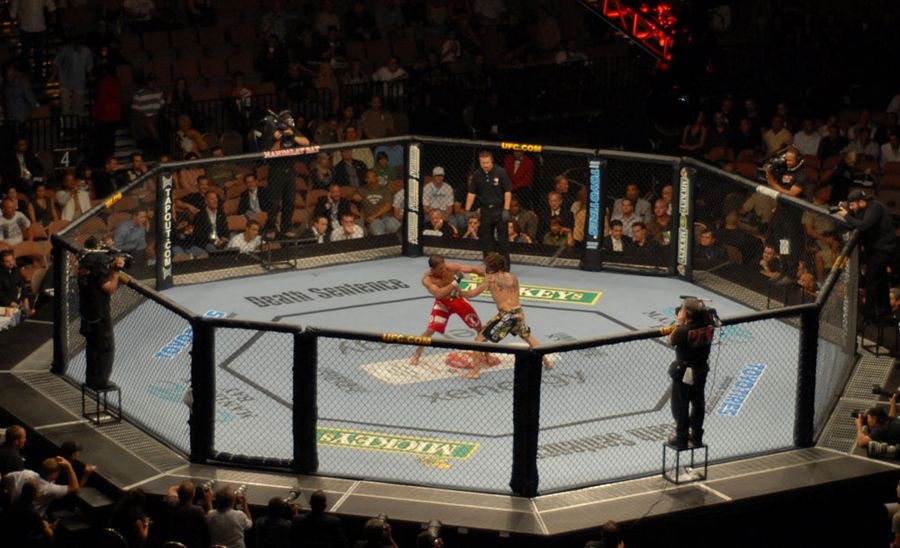
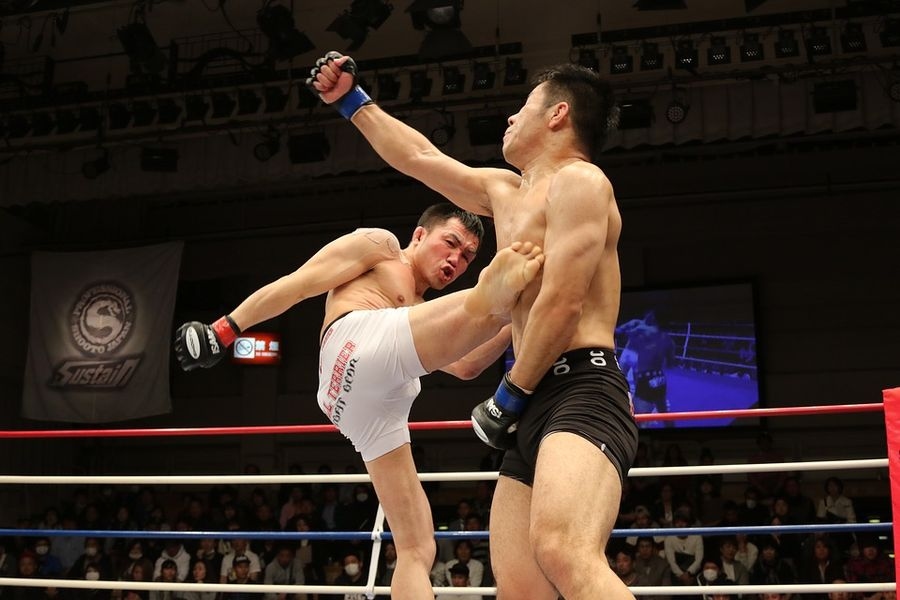
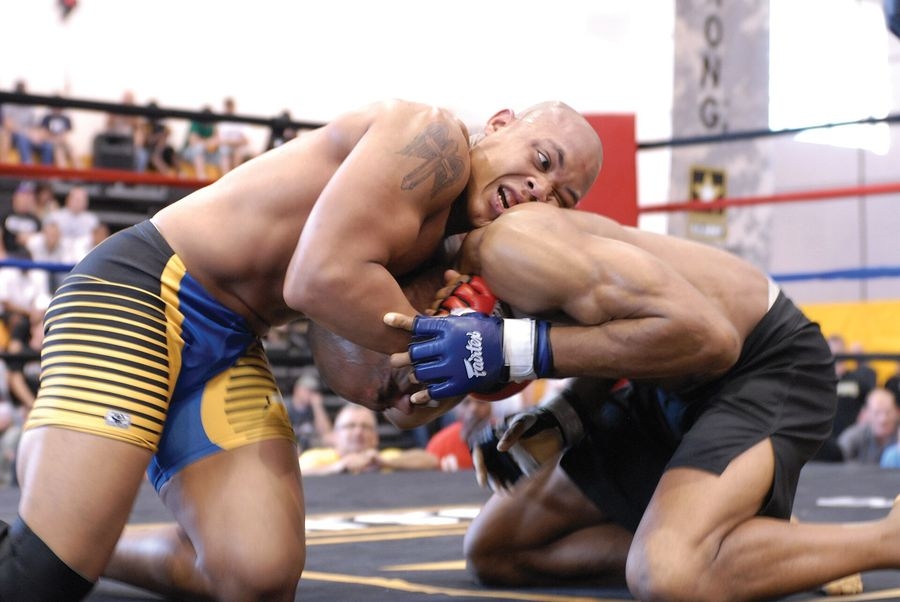
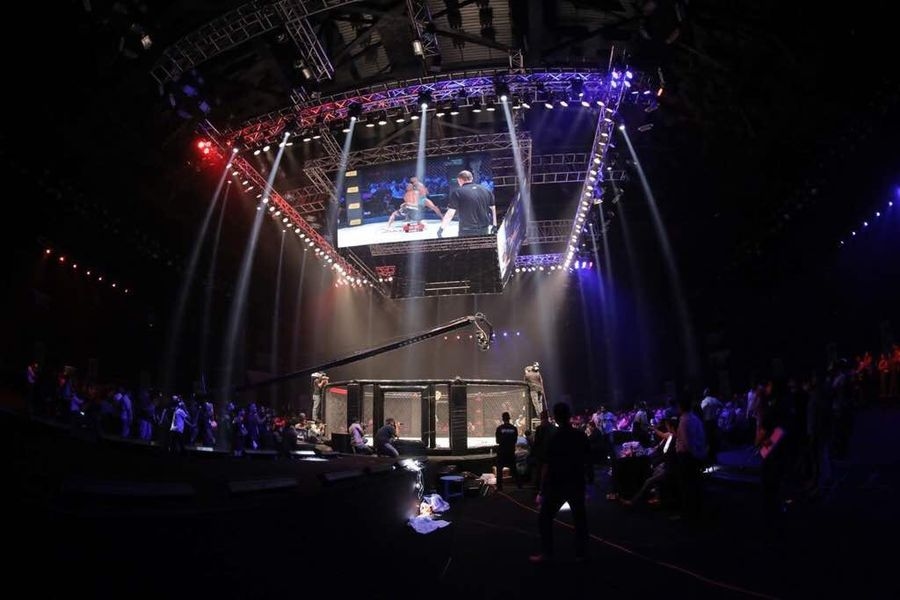
Photos from the Sport-Fight.net archives, credits being checked.
Videos
Frequently asked questions
What age can you start MMA?
Many clubs run children's classes from primary school age, built around wrestling, groundwork and pad work, with no strikes to the head. In competition IMMAF lets young people fight from 12, with no head strikes until 17. Adults can start at any age if they only want to train.
Is MMA dangerous?
In training, injuries are typical of combat sports: sprains, bruises, sore fingers and shoulders. Professional bouts carry a risk of cuts and concussion, as in boxing. Amateur rules cut the risk: no elbows, no knees to the head, thicker gloves and compulsory shin guards.
What is the difference between MMA and Brazilian jiu-jitsu?
Brazilian jiu-jitsu has no strikes: the aim is to control the opponent on the ground and force a tap with a lock or a choke. MMA uses those techniques and adds punches, kicks, knees and elbows, standing and on the ground.
What is the difference between MMA and kickboxing?
Kickboxing is stand-up striking only; once the fighters grab each other the referee separates them. MMA allows wrestling, takedowns and groundwork, and uses much smaller gloves so fighters can grip.
Is MMA legal in France?
Yes. Competition has been legal since 2020, when the sports ministry handed the sport to the French Boxing Federation, which sets safety rules for every event. The first legal shows took place in October 2020 and the UFC has held cards in Paris since 2022.
What kit do I need to start MMA?
MMA training gloves, boxing gloves for sparring, shin guards, a gum shield, a groin guard, fight shorts and a rash guard. Overall cost depends on the club: membership fees, plus a federation licence and a medical check if you want to compete.
On screen
Warrior (2011)
Gavin O'Connor
The Smashing Machine (2025)
Benny Safdie
MMA (mixed martial arts) clubs
Cities with the most clubs:
- Paris (75)8 clubs
- Nice (06)5 clubs
- Marseille (13)5 clubs
- Tourcoing (59)4 clubs
- Courbevoie (92)4 clubs
- Saint-Denis (974)4 clubs
- Villar-Saint-Pancrace (05)3 clubs
- Toulouse (31)3 clubs
- Clermont-Ferrand (63)3 clubs