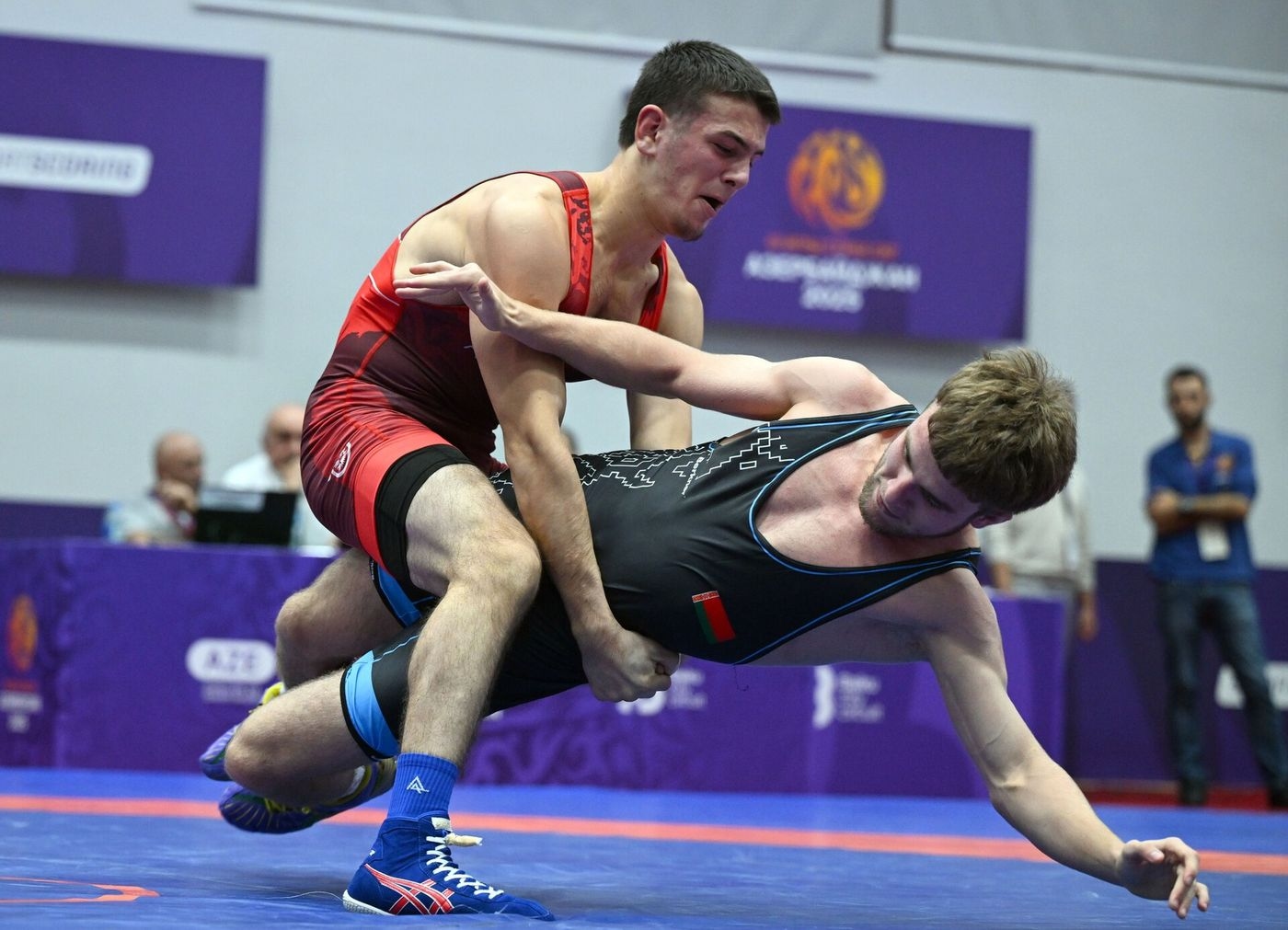
Overview
Two athletes face each other on a circular mat with no weapons and no strikes. Punches, kicks and joint locks are all illegal: wrestlers grip, off-balance, throw and control. The ultimate goal is the fall (or pin), holding the opponent with both shoulders on the mat long enough for the referee to confirm control. Without a fall, the bout is decided on points.
There are three Olympic styles. In Greco-Roman, you may not grab below the waist, trip your opponent or use your legs actively. In freestyle, leg attacks and trips are allowed. Women's wrestling follows freestyle rules.
This is not professional wrestling, the scripted entertainment covered in our catch entry. The world governing body, United World Wrestling (UWW), also oversees grappling, beach wrestling (created in 2006) and a number of folk styles such as Senegalese wrestling, Central Asian belt wrestling and Turkish oil wrestling. Britain has its own folk tradition in Cumberland and Westmorland wrestling, and Brittany has gouren, which has its own entry on Sport-Fight.
History
Wrestling is one of the oldest sports on record. Tombs at Beni Hasan in Egypt show hundreds of pairs of wrestlers painted around the 20th century BC. In Greece, wrestling joined the ancient Olympic Games in 708 BC and was the deciding event of the pentathlon.
Modern Greco-Roman wrestling took shape in 19th-century Europe. In France it was known as French wrestling or open-hand wrestling and drew crowds at fairs and music halls. The name Greco-Roman is credited to the Italian Basilio Bartoletti and does not reflect any specific ancient practice.
Greco-Roman was on the programme of the first modern Games in Athens in 1896, with a single open-weight event won by Germany's Carl Schuhmann. Freestyle, then called catch-as-catch-can, made its debut in St Louis in 1904. Since then wrestling has missed only the 1900 Games. Women's wrestling became an Olympic event at Athens 2004.
In February 2013 the IOC executive board recommended dropping wrestling from the Olympic programme. The international federation overhauled its rules and leadership, and wrestling was voted back in on 8 September 2013 in Buenos Aires. Known for decades as FILA, the federation has been called United World Wrestling since 2014 and is based in Switzerland.
Techniques
Every bout starts on the feet with a constant fight for grips on the hands, wrists, neck and arms. In freestyle the most common attack is the single-leg or double-leg takedown, which puts the opponent on their back or stomach. Trips and leg sweeps round out the repertoire.
Greco-Roman is all about the upper body. Signature moves include the arm throw, the hip toss, the headlock and above all the suplex (back arch), where the wrestler lifts the opponent and throws them in an arc over their own head. These high-amplitude throws earn the most points.
On the mat, in the par terre position, the bottom wrestler is on hands and knees while the top wrestler tries to turn them and expose their back, with gut wrenches, arm turns or, in freestyle, leg laces. The defender keeps their stomach on the mat or bridges to avoid the fall.
Wrestling demands all-round conditioning: strength, explosive power, flexibility and endurance for six minutes of intense effort. Neck, hip and footwork drills take up a large share of training.
Rules and competition
Under the UWW rules of January 2026, a senior, U23 or U20 bout lasts two periods of 3 minutes with a 30-second break. U15, U17 and veterans wrestle two periods of 2 minutes. The mat has a central area 7 metres across, an orange band 1 metre wide (the passivity zone) and a protection area of 1.5 metres.
Actions score from 1 to 5 points. Stepping out of the mat with a whole foot gives your opponent 1 point. A controlled takedown or an exposure (back at less than 90 degrees to the mat) is worth 2. A standing throw that takes the opponent straight into danger scores 4, and a high-amplitude throw into immediate danger scores 5.
A bout ends early by fall, three cautions, disqualification or technical superiority: an 8-point lead in Greco-Roman, 10 points in freestyle and women's wrestling. If the score is level, the winner is the wrestler with the highest-value move, then the most moves of that value, then the fewest cautions, then the last technical point. Coaches can request a video review (challenge); a lost challenge gives the opponent 1 point.
Passivity is penalised. In freestyle, a wrestler called for passivity has 30 seconds to score or the opponent gets 1 point. In Greco-Roman, the first two passivity calls of the bout give 1 point to the active wrestler, who chooses to restart standing or in par terre.
Each style has ten weight classes at the senior World Championships but only six at the Olympics: 57, 65, 74, 86, 97 and 125 kg in freestyle; 60, 67, 77, 87, 97 and 130 kg in Greco-Roman; 50, 53, 57, 62, 68 and 76 kg for women.
Equipment
Wrestlers compete in a one-piece singlet, red or blue depending on the corner, made of smooth fabric. They wear wrestling boots: high-cut and flexible, they support the ankle and grip the mat, with no heels or metal parts.
Ear guards are allowed, and many wrestlers wear them in training to avoid cauliflower ear, a blood clot that hardens if left untreated. A gum shield is recommended. The club supplies the mat and throwing dummies.
To start, shorts, a close-fitting T-shirt and a pair of wrestling boots are enough. Competing requires a licence from your national federation.
Photos
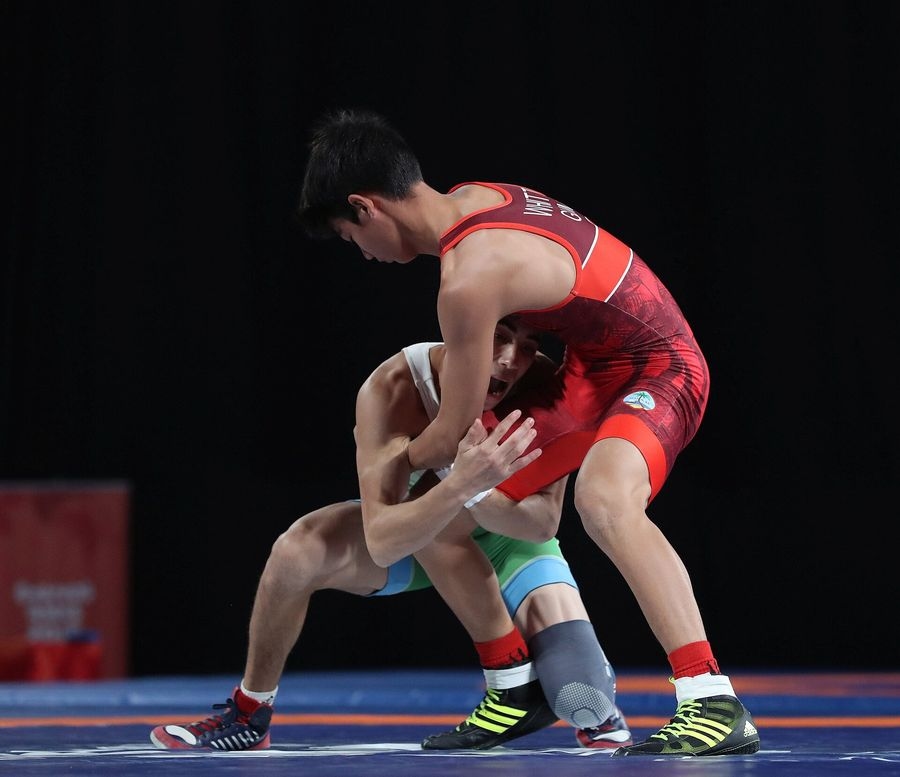
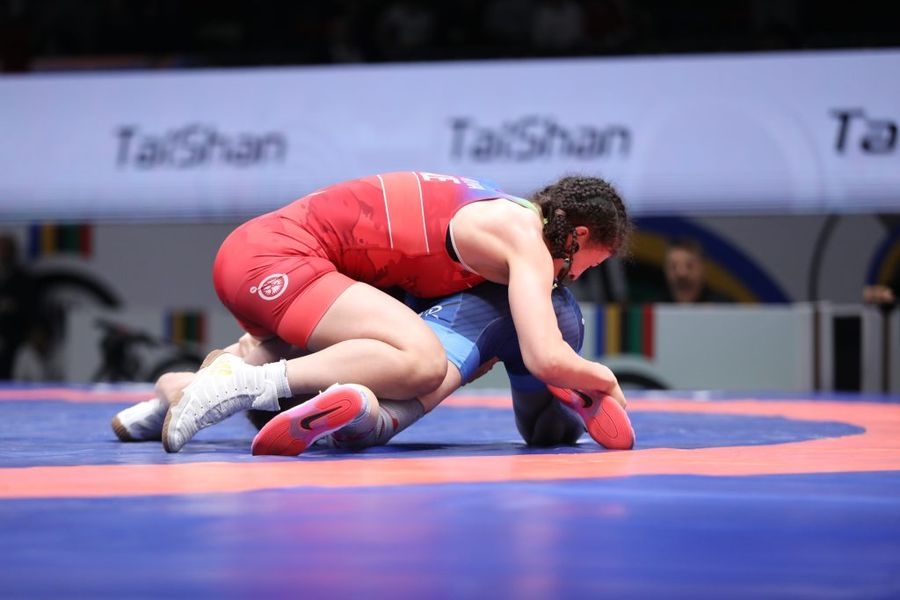
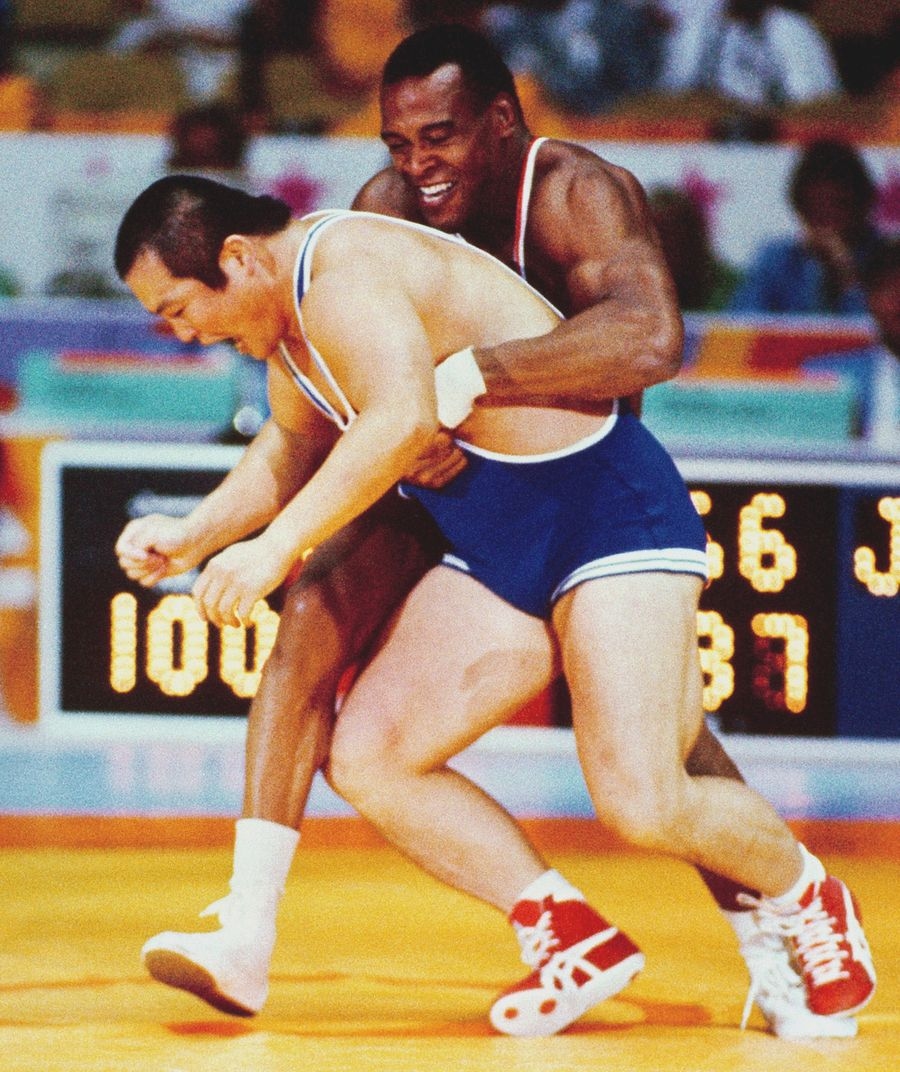
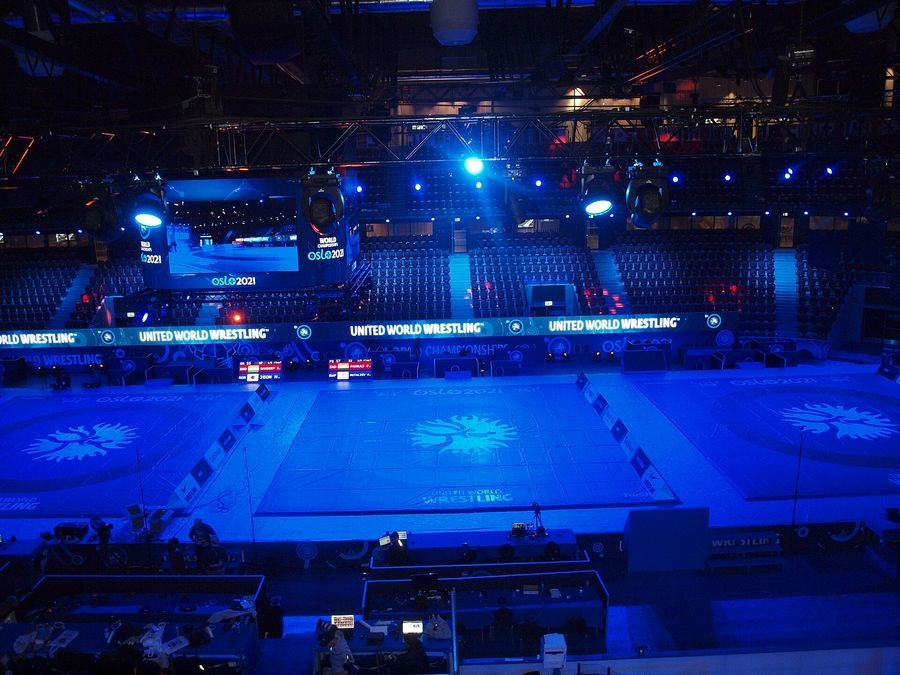
Photos from the Sport-Fight.net archives, credits being checked.
Videos
Frequently asked questions
What is the difference between freestyle and Greco-Roman wrestling?
In Greco-Roman you cannot grab below the waist or use your legs to attack, so upper-body throws dominate. Freestyle allows leg attacks, trips and sweeps. Technical superiority comes at an 8-point lead in Greco-Roman and a 10-point lead in freestyle.
What age can children start wrestling?
It depends on the club and the national federation. In France the youngest category (U7) starts at 3, with wrestling games and no competition; the first tournaments come at U9. Adults can take it up at any age for fitness.
How is wrestling different from judo?
Judoka wear a jacket and usually grip it; wrestlers wear a singlet and grip the body. Judo allows armlocks and strangles, wrestling does not. A wrestling fall (both shoulders pinned) is also different from a judo ippon.
Can girls and women wrestle?
Yes. Women's wrestling has been an Olympic event since 2004, with six weight classes at the Games. In younger age groups, girls and boys often train and compete together.
Is wrestling dangerous?
With no strikes, the risk of concussion is lower than in striking sports. The most common injuries affect the shoulders, knees, neck and ears. Learning to fall and warming up the neck properly reduce the risk.
What kit do I need to start?
A pair of wrestling boots is the only purchase that really matters at first. A singlet is only needed for competition. Ear guards prevent cauliflower ear and a gum shield is a good idea.
On screen
Warrior (2011)
Gavin O'Connor
The Smashing Machine (2025)
Benny Safdie
Wrestling clubs
Cities with the most clubs:
- Paris (75)4 clubs
- Marseille (13)2 clubs
- Pessac (33)2 clubs
- Béziers (34)2 clubs
- Gien (45)2 clubs
- Orléans (45)2 clubs
- Le Mans (72)2 clubs
- Montreuil (93)2 clubs
- Entre-Deux (974)2 clubs